

I have an invention idea. What do I do first?
The first steps that protect your idea and your money, in the right order.
Most inventors I talk to have the same problem. They've had the idea for months, sometimes years, and they don't know whether to tell someone, look it up, file a patent or start building. So nothing happens, or the wrong thing happens first.
I've been inventing for a long time myself. I've designed a high-efficiency pump, built pool automation systems nobody sold, and made an exoskeleton back in 2011. The ideas that went well all followed roughly the same order. This guide lays it out.
A quick note before we start
I'm a product builder, not a lawyer. Nothing here is legal advice. For anything about patents, designs or protecting your idea, talk to a registered patent attorney. Many offer a free or low-cost first meeting.
1. Write it down and date it
Before anything else, get the idea out of your head and onto paper. Write down:
- the problem it solves, and who has that problem
- how it works, as far as you know right now
- rough sketches, even bad ones
- what makes it different from anything you've seen
Date it and keep it somewhere safe. A notebook works, and so does a document emailed to yourself. This won't legally protect the idea on its own, but it gives you a clear record, and it forces you to think it through properly. Half the time, writing it down shows you the part you haven't solved yet.
2. Check what already exists
This is the step people skip because they're scared of the answer. Do it anyway. It's free, and finding out now costs a lot less than finding out after you've paid for a prototype.
- Patent searches: search IP Australia's patent database and Google Patents using a few different ways of describing your idea
- Product searches: look through Amazon, eBay, Alibaba, Kickstarter and trade suppliers for anything similar
- Industry knowledge: ask people who work in the field, without giving away the clever part
Finding something similar isn't always the end. Often the existing product is expensive, clunky or solves a slightly different problem. That can be your opening. But you need to know exactly what you're up against.
3. Keep it confidential
Until you've had advice, treat the idea as a secret. Talk about the problem it solves, not how you solve it. When you do need to share details with a designer, engineer, manufacturer or possible partner, ask them to sign a non-disclosure agreement (NDA) first.
A good builder won't be offended. I'm happy to sign an NDA before anyone tells me the details of their idea, and I'd be wary of anyone who refuses.
4. Talk to a patent attorney before going public
This is the step that matters most, and the one people get backwards. In Australia, telling the public about your invention, through a social media post, a crowdfunding page, a market stall or a news story, can affect whether you can patent it later.
Australia does have a 12-month grace period for some disclosures, but relying on it is risky, and many other countries don't have the same rules. If you might ever sell overseas, a public post could close that door. So the safe order is: get advice first, then go public.
Some things a patent attorney can walk you through:
| Option | What it's for |
|---|---|
| Provisional patent application | An early filing that gives you 12 months to file a complete application, while you keep developing the idea |
| Standard patent | The main form of patent protection for how an invention works |
| Design registration | Protects how a product looks, rather than how it works |
| Trade secret | Some things are better kept quiet than patented, especially processes nobody can see from the outside |
You might come across older articles about the "innovation patent". It has been phased out, and no new applications have been accepted since 25 August 2021.
5. Prove the core idea works
Before spending real money, prove the one thing your invention depends on. If it's a new mechanism, build a rough version from whatever's in the shed. If it's a sensor idea, wire up an off-the-shelf board on the bench and see if the reading is reliable.
This "proof of concept" doesn't need to look good. It just needs to answer the question: does the clever part actually work? When I was designing my pump, the early versions looked nothing like a finished product. Their only job was to prove the flow idea before anything was refined.
6. Scope it properly
Once you know the core idea works, work out what the whole product involves before you pay anyone to build it. That means:
- what parts it needs (mechanical, electronic, app, cloud)
- where and how it will be used (outdoors, wet, battery or mains)
- what it might cost to make, roughly, at different quantities
- what the first prototype needs to prove
- which rules apply if you sell it, such as electrical safety
If your idea includes electronics or an app, my guide on scoping an IoT product goes through this in more detail.
7. Build the prototype in stages
Prototypes work best in steps, with each one earned by the results of the last:
- Proof of concept: rough, on the bench, proving the core idea
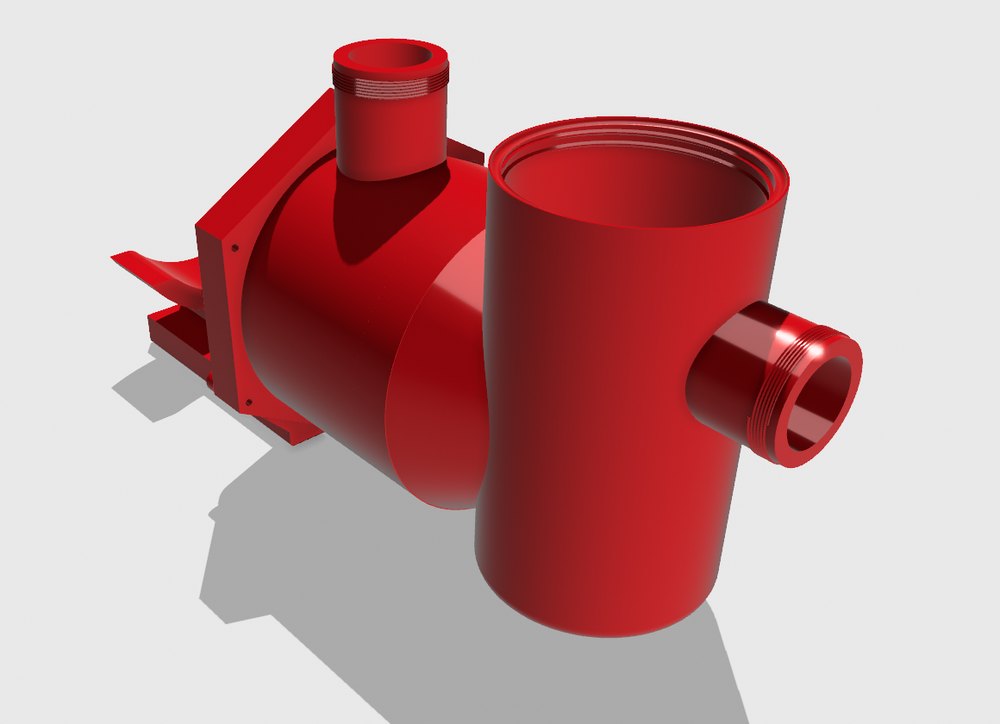
- Looks-like model: a CAD design and 3D print to check size, shape and feel
- Working prototype: it looks right and works right, tested where it will really be used
- Pre-production: designed for manufacturing, with real materials and costs
8. Decide how you'll take it to market
With a working prototype, you can make the big decision: manufacture and sell it yourself, or license it to a company that already makes and sells similar products. Each suits a different kind of inventor. I've written a separate guide on licensing vs manufacturing your invention.
Your first-steps checklist
- Idea written down, sketched and dated
- Patent and product searches done
- Details kept confidential, with NDAs for anyone you share with
- Patent attorney consulted before any public disclosure
- Core idea proven with a rough proof of concept
- Full product scoped before paying for a build
Common questions
Should I patent my invention before building a prototype?
Not always, but you should talk to a registered patent attorney before you show it publicly. Many inventors file a provisional patent application early, which gives them 12 months to keep developing before filing a complete application.
Can I tell people about my invention idea?
You can talk about the problem it solves, but keep the details of how it works confidential until you've had advice. Ask anyone you share details with to sign a non-disclosure agreement first.
How do I check if my invention already exists?
Search IP Australia's patent database and Google Patents using several different descriptions of your idea, then search online stores and crowdfunding sites for similar products. Finding something similar doesn't always mean your idea is dead, but you need to know about it.
What does a provisional patent do in Australia?
A provisional patent application gives you an early filing date and 12 months to file a complete patent application. A patent attorney can explain whether it suits your idea.
Do I need a working prototype before approaching companies?
In most cases, yes. Companies take an idea far more seriously when it has a working prototype, a clear IP position and some evidence that people want it.
Ready to find out if your idea can be built?
I'm Luke, and I run Wayward Vector, a product and prototype studio on Tamborine Mountain. I'm happy to sign an NDA before you tell me anything. My Feasibility & Scoping Sprint ($2,200 including GST) gives you a plan, CAD or mock-ups and a fixed quote for the build, and the fee is credited to your build if you go ahead.
Tell me about your idea