

How much does a prototype cost in Australia?
Real price ranges, what pushes them up, and how to spend less getting to a working product.
"How much will it cost?" is the first question almost everyone asks me, and it's a fair one. The honest answer is that it depends on what the prototype has to prove. A 3D-printed bracket and a connected device with its own app are both "prototypes", but they're very different jobs.
This guide gives you real price ranges, explains what moves a project up or down those ranges, and covers the costs that tend to catch people out later. The figures are my own prices at Wayward Vector, including GST. Other studios and engineering firms will price differently, so treat these as a guide to the scale of each job rather than a market average.
Prototype costs by type
| Type of prototype | Typical price (inc. GST) | What you get |
|---|---|---|
| CAD design and 3D-printed part | $330 – $1,650 | A designed and printed part, enclosure, bracket or product mock-up, plus the CAD files |
| Sensor or monitoring device | $880 – $2,750 + parts | A working device that reads something (level, temperature, power) and alerts your phone |
| Small business app or web tool | $1,650 – $3,300 | A focused app or tool such as a quote calculator, booking form or job tracker |
| Rescue of a stalled project | $1,100 – $3,300 | An existing half-built app, prototype or Arduino project finished and working |
| Feasibility and scoping sprint | $2,200 | A plan, parts list or feature plan, CAD or mock-ups, and a fixed build quote. Credited to your build |
| Private AI system | From $6,600 | An AI system running on hardware you own, set up for one or more business tasks |
| Full product build (hardware, app and backend) | From $16,500 | Custom electronics, enclosure, phone and web apps, cloud backend, paid in milestones |
Most inventors start in the top half of that table and work down as each stage proves itself. That's the cheapest way to get to a real product.
What actually drives the cost
How many separate parts the system has
A part on its own is one job. A device that talks to an app is at least three: the electronics, the app and something in between (often a cloud server). Every extra piece adds design, testing and the work of making the pieces talk to each other reliably.
Where it has to live
A prototype that sits on a bench is cheaper than one that has to survive outdoors, near water, in heat or in chlorine. Sealed enclosures, better connectors and testing in the real environment all add time. I learnt that one from years of building pools: equipment pads are hard on electronics.
Power and connectivity
Plugged into the wall with good Wi-Fi is the easy case. Battery life targets, solar, 4G connections or long-range radio each add design work and parts.
Who uses it
One user with full control is simple. Owners, guests, staff and technicians with different permissions take more work. On the smart pool controller I built, guest QR access with limits set by the owner, and remote access for service technicians, were a big part of the build.
How finished it needs to look
A "does it work?" prototype can be rough. A prototype for investors, a trade show or real customers needs a proper enclosure, a polished app and a few extra rounds of refinement.
Build it in stages
The best way to control the cost of a prototype is to pay for one question at a time. A typical path looks like this:
- Scope it. Work out what the product needs to do, what it doesn't, and what the first version must prove. This is what my $2,200 feasibility sprint covers, and the fee comes off the build.
- Prove the core idea. Off-the-shelf boards and sensors on a bench, often with no enclosure at all.
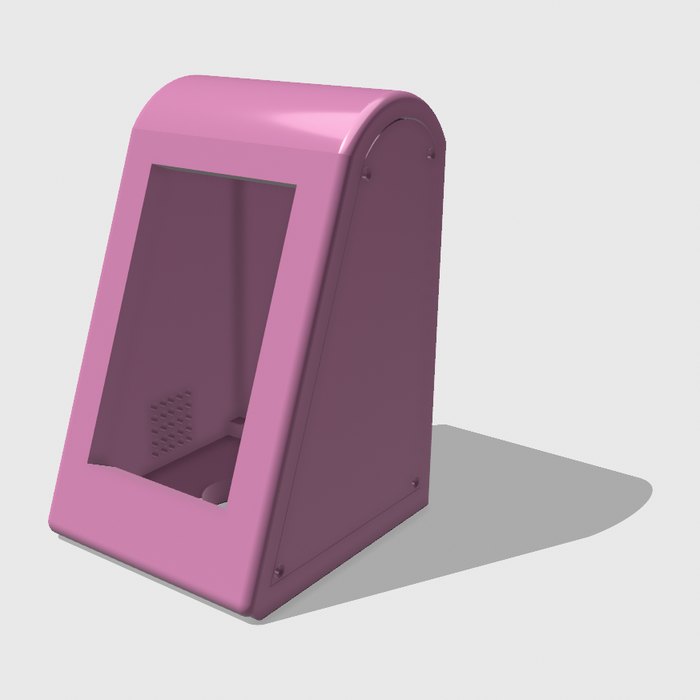
- Build a working prototype. A CAD-designed, 3D-printed enclosure, a real app, tested where the product will actually be used.
- Pilot it. A handful of units with real users, collecting feedback and fault logs.
- Design for production. Only once the earlier stages have earned it.
Each stage gives you a decision point. If the idea doesn't work, you find out for hundreds or a few thousand dollars, not tens of thousands.
The costs that come later
These aren't part of building a prototype, but you should know about them before you plan a budget for a product you intend to sell:
- Injection-mould tooling. If you move from 3D-printed enclosures to moulded plastic, the moulds themselves are a separate, often large cost. Depending on the part, it is often thousands to tens of thousands of dollars.
- Compliance and certification. Electrical and radio products sold in Australia generally need to meet safety and radio rules, usually shown with the RCM mark. Testing labs charge separately, and costs vary a lot with the product.
- Custom circuit boards in volume. A prototype might use off-the-shelf modules. A production version usually needs a custom board, which means design, sample runs and minimum order quantities.
- Running costs. Cloud hosting, mobile data plans for 4G devices, app store accounts and app updates when phones change.
- Protecting the idea. If you're considering a patent, talk to a patent attorney before showing the idea publicly. Their fees are separate from the build.
None of this needs to be paid for up front. It's just worth knowing it exists so the prototype budget isn't mistaken for the whole product budget.
How to keep the cost down
Ways to spend less
- Write down the one job it must do. Clear scope is the biggest saving there is.
- Use off-the-shelf parts first. Custom electronics can wait until the idea is proven.
- Cut features from version one. Every "while we're at it" adds time. Keep a list for version two.
- Test where it will live early. Finding a signal or water problem late costs far more than finding it early.
- Choose a fixed quote. A fixed price for a clear scope protects you from open-ended hourly bills.
- Gather what you already have. Sketches, photos, existing code or parts all save discovery time.
Why one builder can cost less
Many products end up split between an industrial designer, an electronics engineer, an app agency and a backend developer. Each one quotes their piece, and someone has to make the pieces work together, which is usually where time and money disappear. I do the electronics, CAD, apps and backend myself, so there are no handoffs. The smart pool controller went from nothing to live testing in about two weeks because of that.
That doesn't suit every project. Very large builds, or products needing specialist certification engineering, may need a bigger team. But for most inventors and small businesses getting to a first working version, one builder who can do all of it is usually the faster and cheaper path.
Common questions
How much does a simple prototype cost in Australia?
A simple CAD-designed and 3D-printed prototype part typically costs a few hundred to a couple of thousand dollars. At Wayward Vector that's $330 to $1,650 including GST, depending on complexity and the number of design rounds.
How much does it cost to prototype an electronic device with an app?
A working device with sensors and a phone app usually costs from a few thousand dollars for a focused build, up to $16,500 or more for a full product with custom electronics, an enclosure, apps and a cloud backend. Building in stages keeps the early cost lower.
Do prototype costs include injection moulds and certification?
No. Injection-mould tooling and compliance testing, such as for the RCM mark, are separate later-stage costs that usually come after the prototype is proven. They're worth planning for but don't need to be paid at the start.
How can I reduce the cost of my prototype?
Keep version one focused on the single job it must prove, use off-the-shelf parts first, and get a fixed quote for a clear scope. A short scoping stage before building usually saves more than it costs.
Want a fixed price for your prototype?
I'm Luke, and I build prototypes from Tamborine Mountain for inventors and businesses across South East Queensland. Start with a $2,200 Feasibility & Scoping Sprint, which gives you a plan, CAD or mock-ups and a fixed build quote, and the fee is credited to your build.
Get a fixed quote