

Case study: the Aura Discovery Booth
A walk-in photo booth for a Tamborine Mountain retail store, with seat sensors, a private AI and a printed reading for every guest.
Luna & Myst Co is a wellness and retail store on Tamborine Mountain. They wanted an experience customers would remember, talk about and come back for: something more than a product on a shelf.
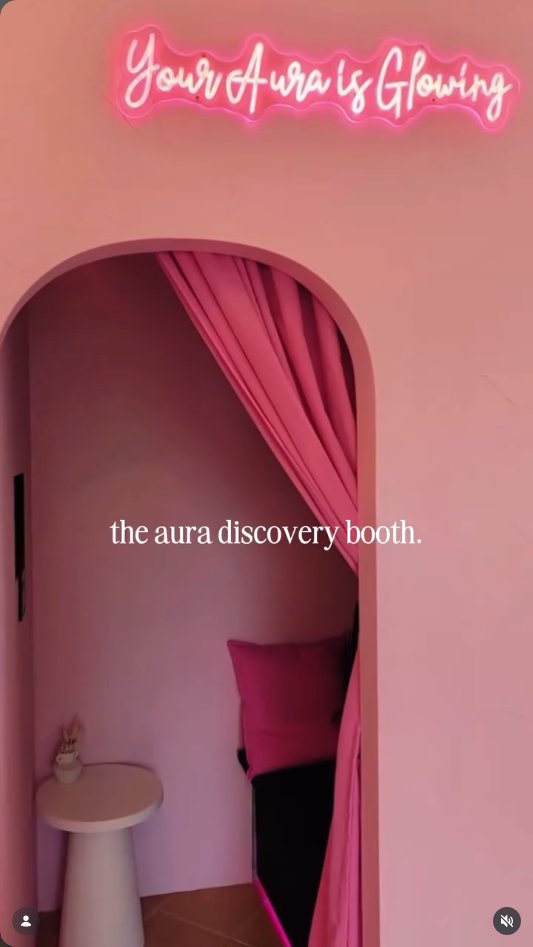
The result is the Aura Discovery Booth. A customer sits in the booth, sensors in the seat pick up their heart rate, the booth takes their photo, and a printed aura portrait and personal reading come out at the counter. It's an entertainment and wellness experience, not a medical or scientific test, and it's in daily use in the store.
The brief
The booth had to do a lot of things at once:
- look beautiful and fit the store's pink, glowing style
- be simple enough for any customer to use without staff hovering
- handle personal information respectfully, with clear consent
- produce a printed portrait and a reading that feels personal to each guest
- be reliable enough to run every day in a busy shop
Later, the client also needed portable versions for a corporate brand shoot, so the design had to work outside the store as well.
Designed in CAD first
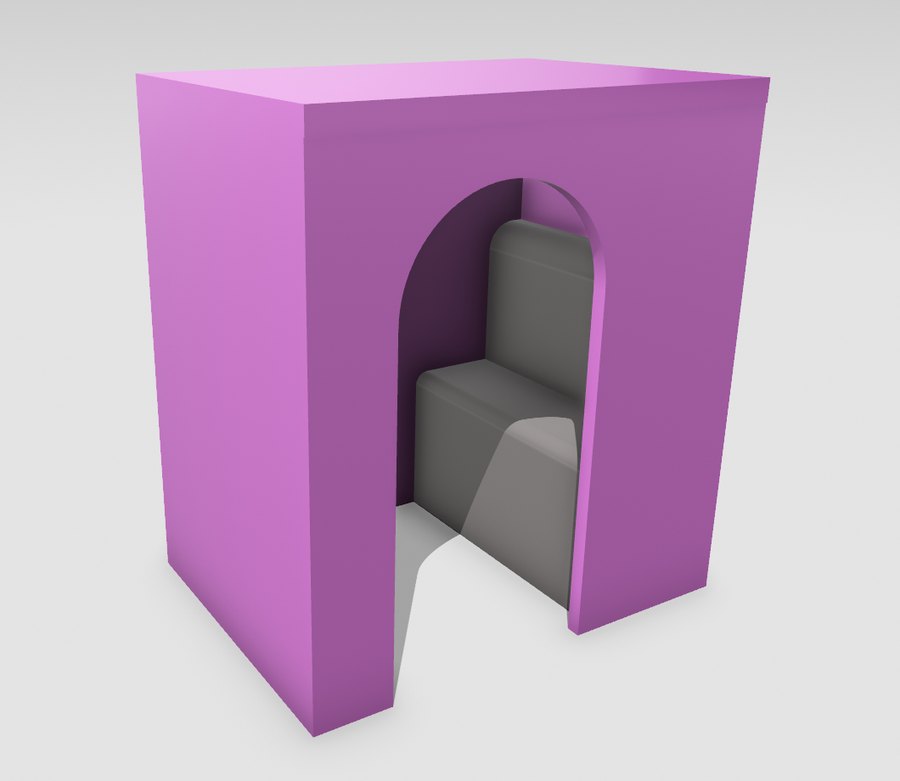
Before cutting any material, I modelled the whole booth in CAD: the arched entrance, the built-in seat and the space inside. That let us check proportions, seating comfort and where every cable and sensor would go before building anything. It's much cheaper to move a wall in CAD than in the shop.
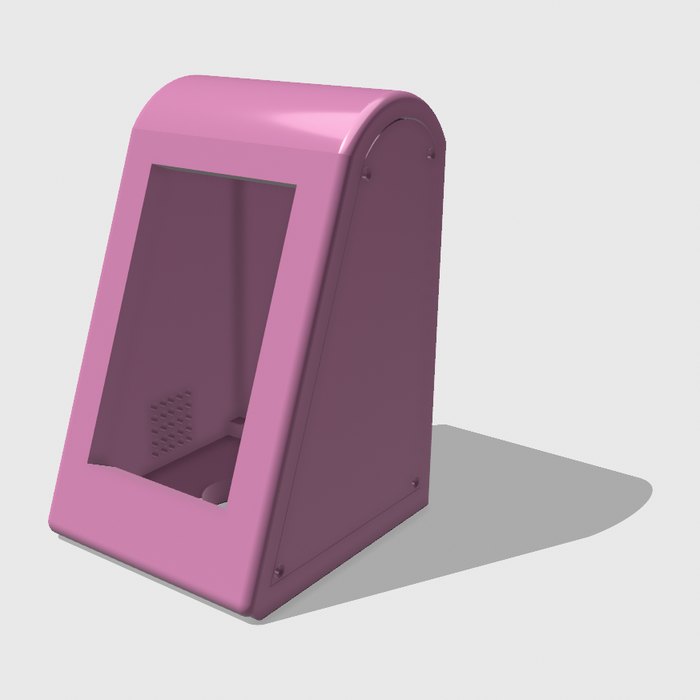
The counter unit and the portable event version got the same treatment. I designed their enclosures in CAD and 3D printed them, so the screens, cameras, speakers and vents all sit exactly where they should.
How the experience works
1. Consent at the counter
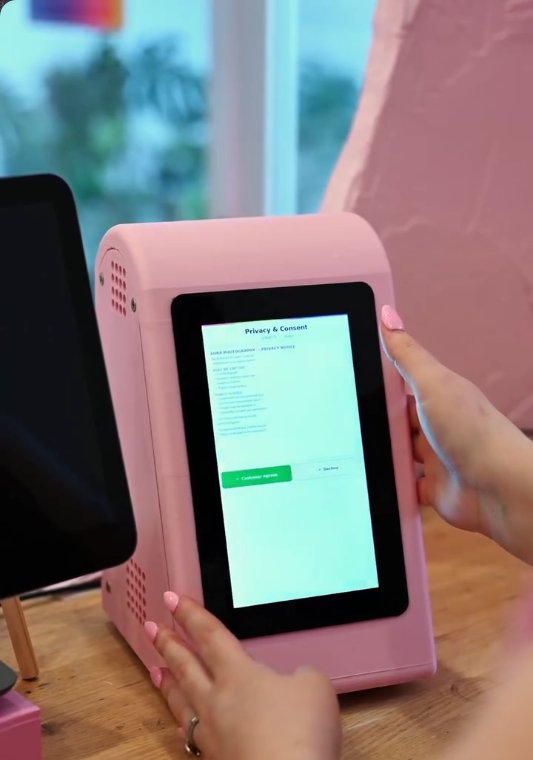
Every session starts at a custom-built touchscreen counter unit. Before anything is captured, the guest sees a privacy and consent screen explaining what the booth does and what happens to their information. They choose to go ahead.
2. A guided session inside the booth
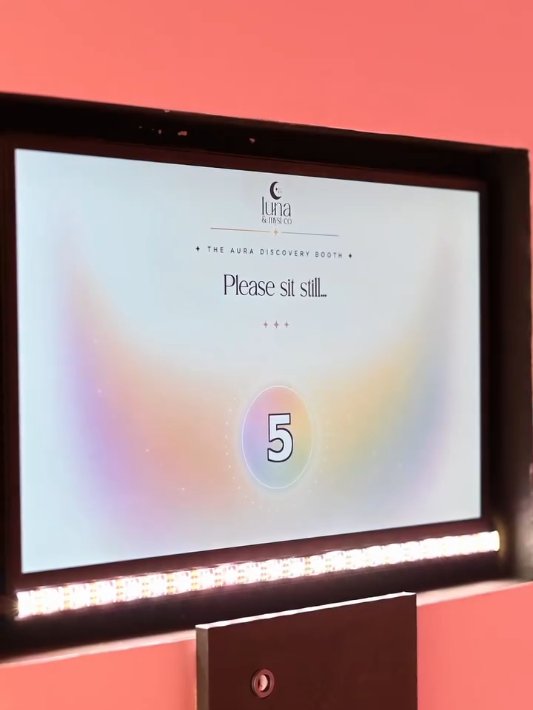
Inside, an on-screen guide walks the guest through the session, with a countdown before the photo and lighting that changes with each step. Accelerometers in the seat pick up the guest's heart rate as they sit, which feeds into their reading.
3. Retake until it's right
People care about how their photo looks. After each shot, the guest sees a preview and can press an illuminated button on the wall to retake it. It's a small detail, but it's one of the things customers mention most.
4. A printed portrait and personal reading
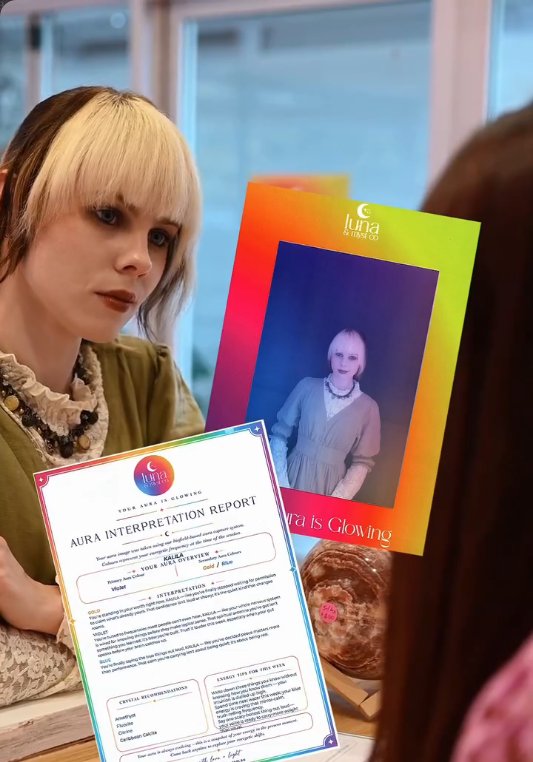
The finished portrait and a personal interpretation report print at the counter. The report is written for each guest by a private AI system, so no two readings are the same.
The technology behind it
- Raspberry Pi 5 running the booth: the guided session, camera, lighting and buttons
- Seat sensors using accelerometers to pick up heart rate
- A private AI system with long-term memory running on an NVIDIA Jetson in the store, writing each personal reading. It runs on-site, so guests' information isn't sent to a cloud AI service.
- Remote control of the printer cabinet, so printing is handled cleanly without staff juggling cables and settings
- LED lighting and illuminated buttons controlled as part of each session
- CAD-designed, 3D-printed enclosures for the counter unit and the portable event units
Taking it on the road
For a corporate brand shoot, I built portable units based on the same system, with enclosures designed around the camera, speaker and vents and the shop's logo embossed on the lid. Because the core software was already proven in store, the portable version was mostly an enclosure and packaging job rather than a new build.
What I learned
Privacy has to be designed in
Asking for consent up front and keeping the AI on-site made the booth easy to trust. Guests relax when they know what's happening with their information.
The small touches carry the experience
The retake button, the countdown and the lighting changes cost little to build, but they're what makes the booth feel polished rather than like a kiosk.
Build for daily use, not a demo
A demo only has to work once. A shop booth has to work every day with no technician on hand. Reliable hardware, simple recovery and a clean printer setup mattered more than any single feature.
Keep the staff side simple
Shop staff have customers to look after, so the booth couldn't need babysitting. Starting each session from the counter, handling printing automatically and making recovery simple if something hiccups meant staff can treat it like any other part of the shop rather than a gadget they have to manage.
Where this approach fits
The booth is a retail experience, but the pieces behind it are useful well beyond aura portraits. Sensors that respond to a person, a guided on-screen session, a camera, printed takeaways and a private AI that writes something personal can be combined for:
- Brand activations and events: a memorable stand that gives every visitor something to take home
- Retail and tourism: an in-store experience that gives people a reason to visit, and to share it
- Wellness and hospitality: personalised experiences that keep guests' information on-site
- Museums and education: interactive exhibits that respond to each visitor
The biggest lesson I'd pass on is to start with the experience you want the customer to have, then work back to the technology. The booth's hardware is fairly ordinary on its own. It's the way the steps, lighting, timing and printed result fit together that makes people talk about it.
Project summary
- Client: Luna & Myst Co, Tamborine Mountain
- Built: walk-in booth fit-out, counter unit, portable event units, sensor system, booth software and a private AI for the readings
- Hardware: Raspberry Pi 5, NVIDIA Jetson, seat accelerometers, camera, LED lighting, printer cabinet control
- Status: in daily use in store, and used on a corporate brand shoot
Common questions
What does the Aura Discovery Booth do?
It takes a customer's photo while seat sensors pick up their heart rate, then prints an aura portrait and a personal reading at the counter. It's designed as an entertainment and wellness experience in store.
Is the aura reading a medical test?
No. The booth is an entertainment and wellness experience, and the reading isn't a medical or scientific assessment.
Where is the AI that writes the readings?
It runs on a private system in the store, on an NVIDIA Jetson, so guests' information isn't sent to a cloud AI service.
Can a booth like this be built for events or other businesses?
Yes. Portable units were already built for a corporate brand shoot, and the same approach can be adapted for events, retail or brand activations.
Want an experience your customers remember?
I design and build interactive experiences end to end: CAD, fit-out, electronics, software and private AI. Full builds start from $16,500 including GST, and a $2,200 Feasibility & Scoping Sprint gets you a plan, mock-ups and a fixed quote.
Talk to me about your idea